Case Study
Guiding customers to
the right decision
Designing the Prospect Experience for Freedom Debt Relief
Freedom Debt Relief helps individuals with over $7,500 in unsecured debt resolve their financial burden faster and at a lower cost.
I led the design of the Prospect Experience — a critical moment in the acquisition funnel where users decide whether to move forward with the program.
This work focused on transforming a fragmented, high-friction experience into a clear, trust-building decision point, improving conversion while reducing user uncertainty in a financially and emotionally sensitive context.
The Problem
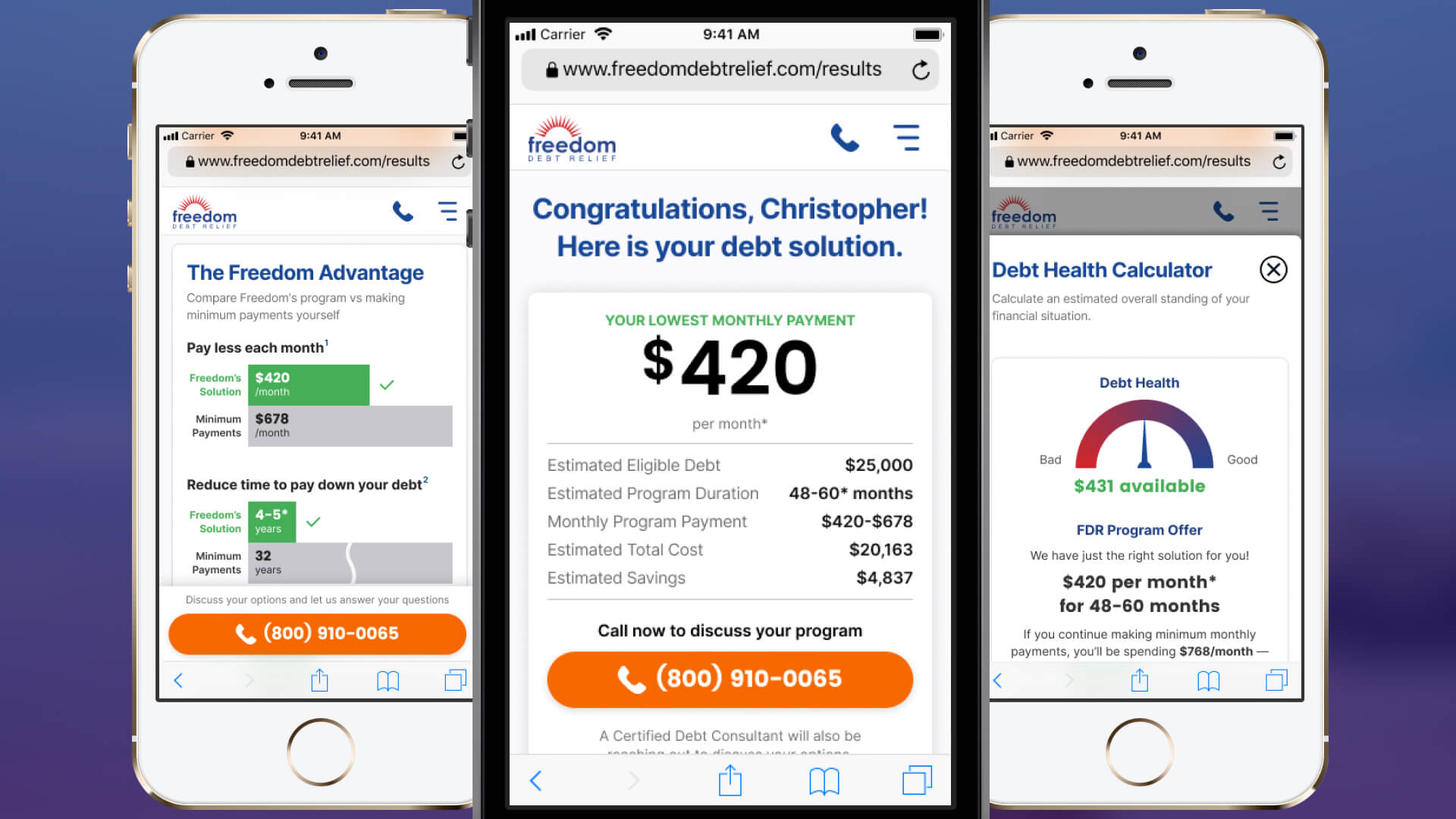
Users entering the debt relief funnel were highly motivated — but also highly uncertain. Through funnel analysis and user research, we identified three systemic breakdowns:
Lack of Trust at a Critical Decision Point
Users were hesitant to proceed due to unclear expectations, skepticism around outcomes, and fear of making the wrong financial decision.
Cognitive Overload During Evaluation
The experience presented complex financial concepts without sufficient structure, making it difficult for users to understand their options.
Weak Transition to Human Consultation
Users reached the end of the flow without feeling fully prepared or confident to engage with a debt consultant.
As a result, drop-off at this stage represented a major loss in potential conversions — a high-stakes, emotionally loaded moment that the existing design failed to adequately address.
Opportunity
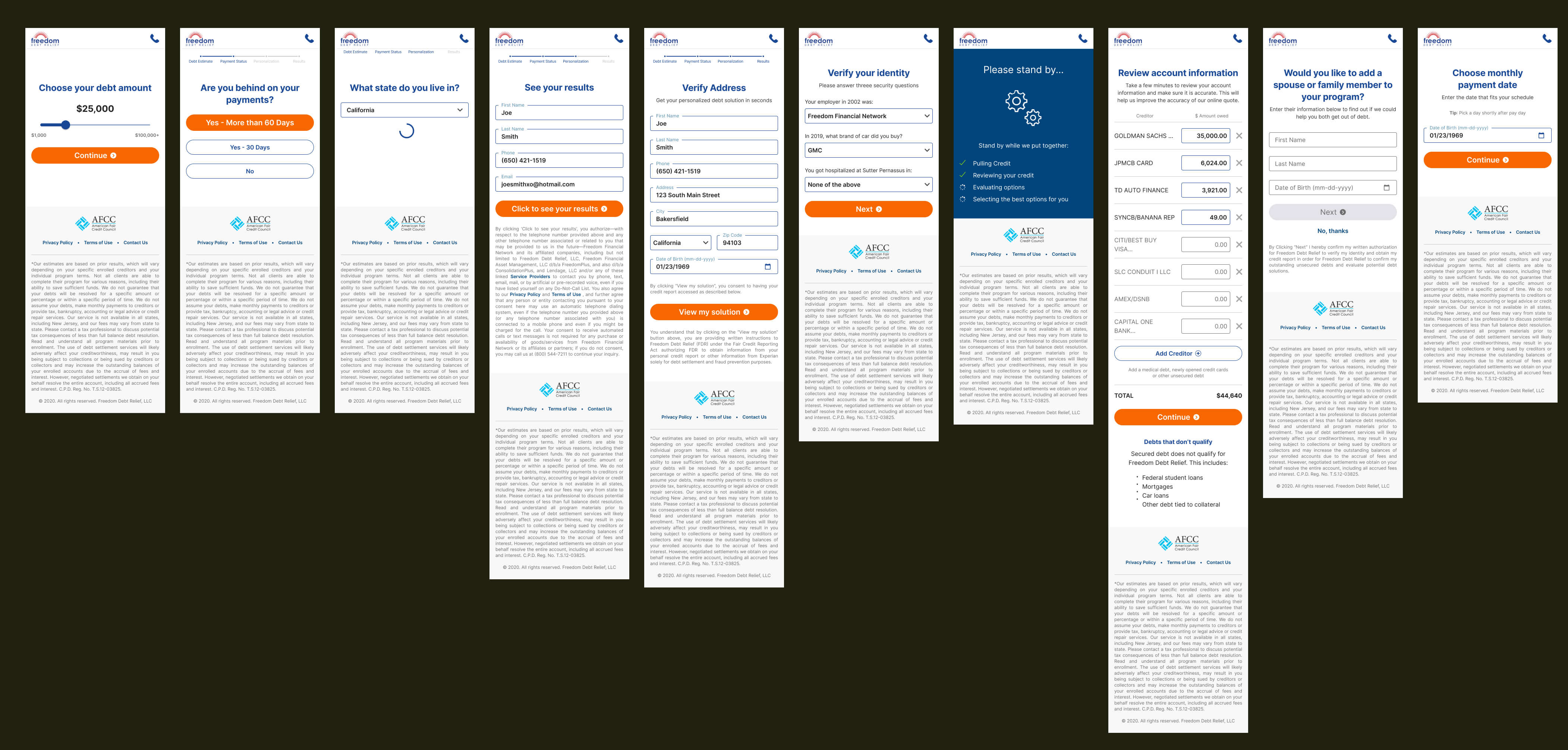
We identified the program estimate page as a high-leverage intervention point to improve outcomes across the entire acquisition funnel.
- Increase user confidence and trust
- Simplify complex financial decisions
- Improve readiness for consultant interaction
- Drive measurable gains in conversion
Strategy
I reframed the experience around three core principles that would guide every design decision through the iterative cycle:
Build Trust Through Transparency
Clearly communicate what the program is, how it works, and what users can expect — removing ambiguity and perceived risk.
Reduce Cognitive Load Through Structured Guidance
Break down complex information into digestible, progressive steps that support decision-making rather than overwhelming the user.
Reinforce Confidence Through Validation
Use social proof, personalization, and clear next steps to help users feel confident in moving forward.
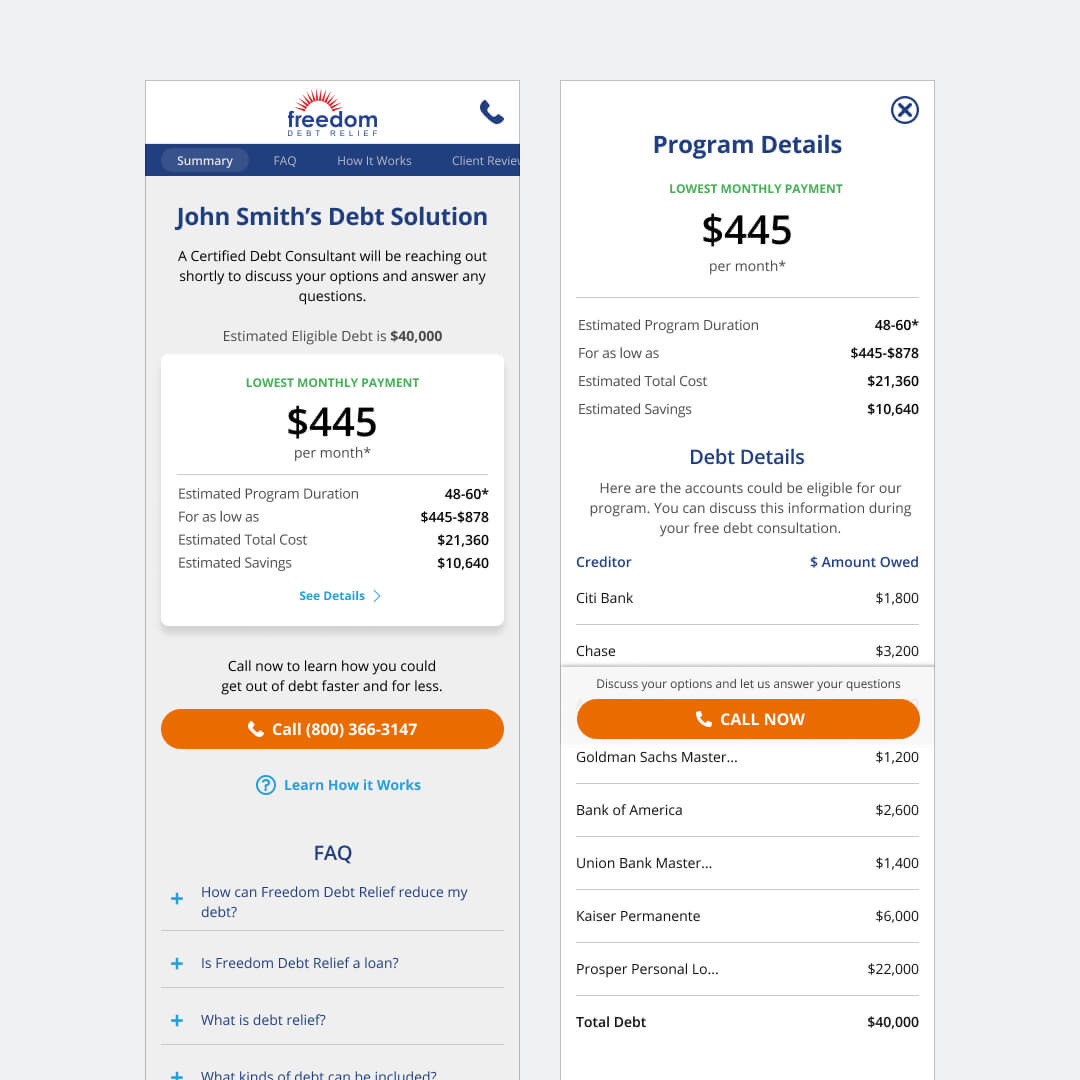
Version 1
Version 1.6
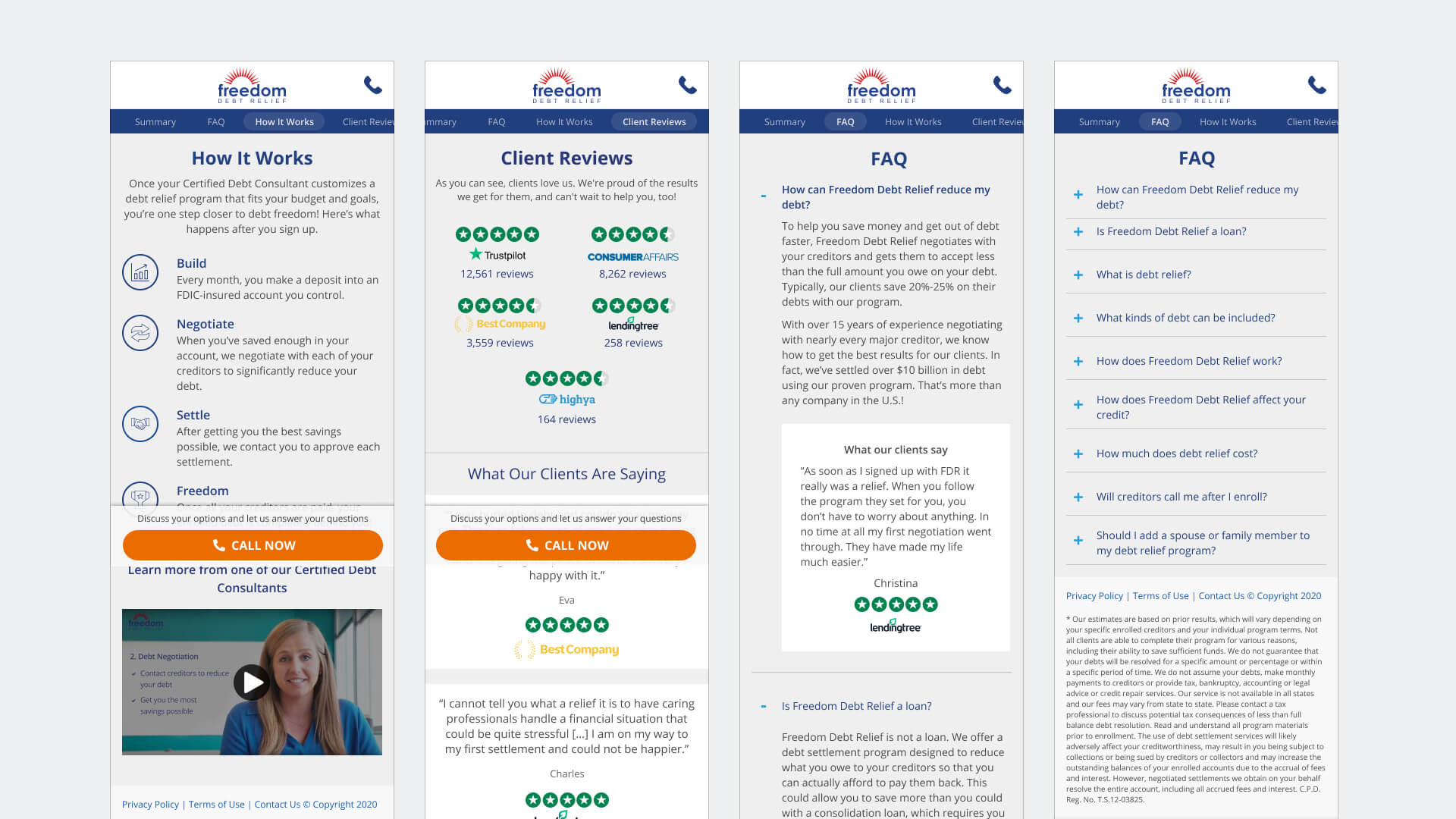
Version 1.7
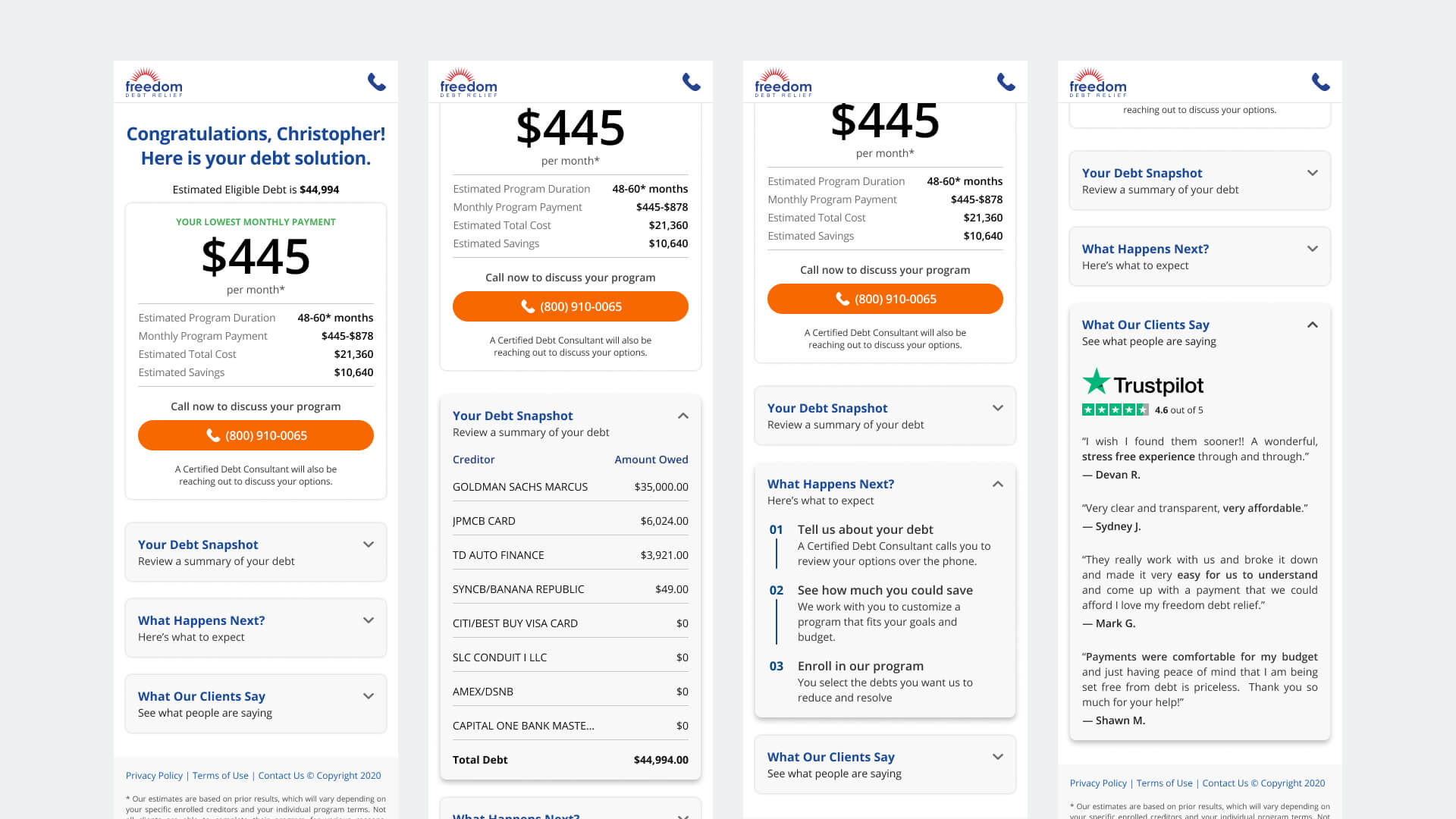

Solution v2.5
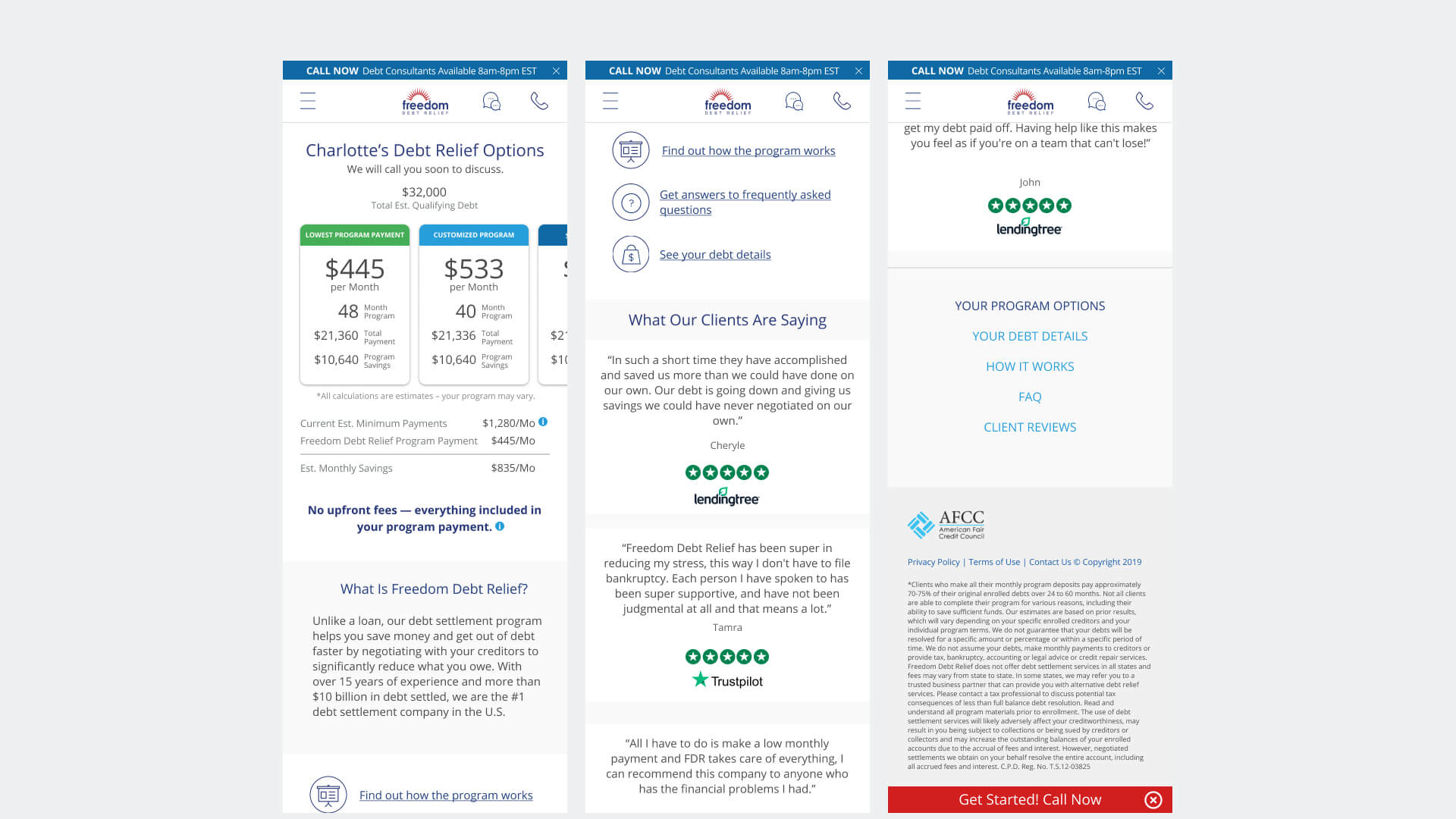
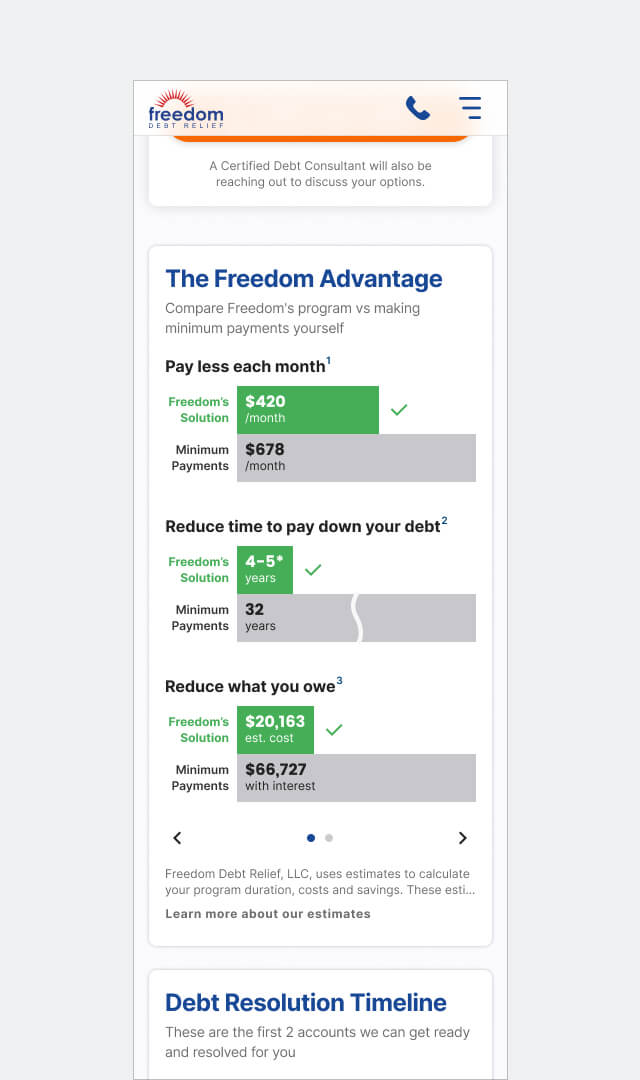
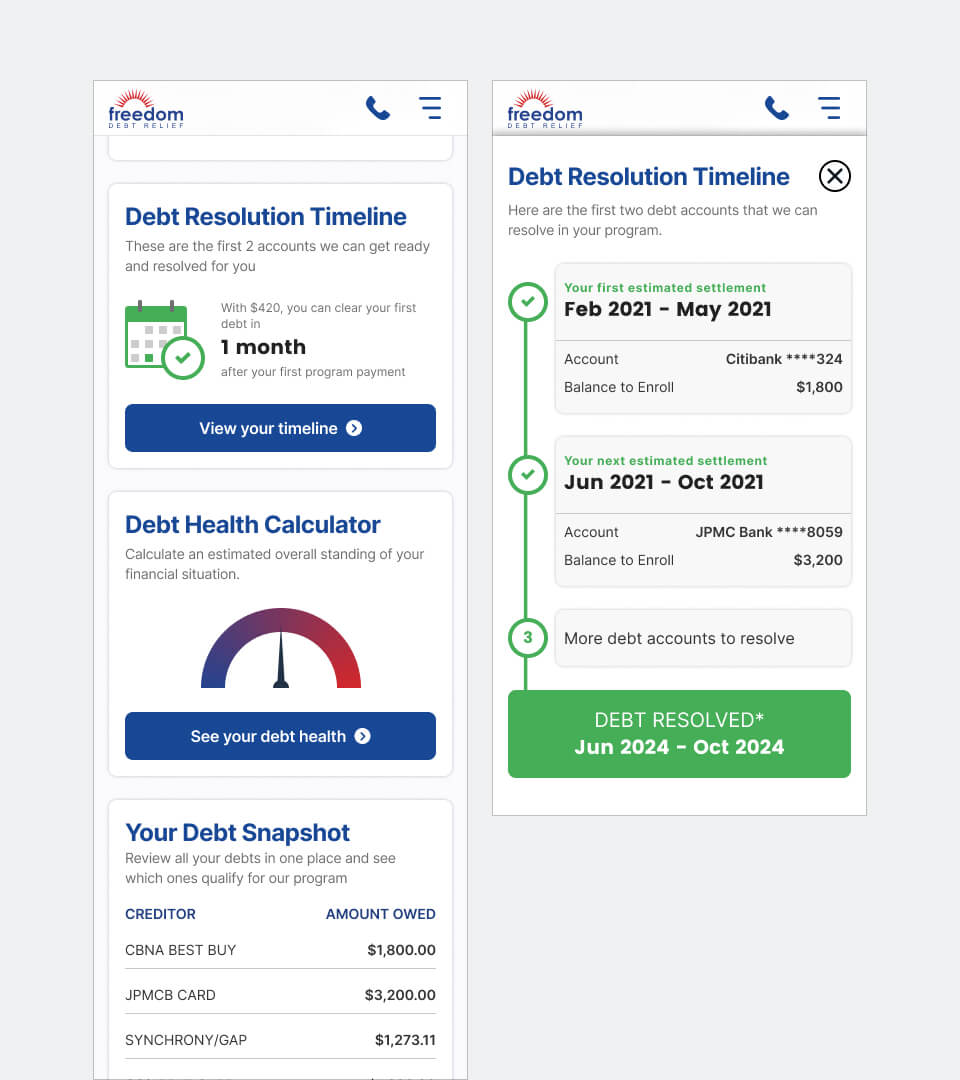
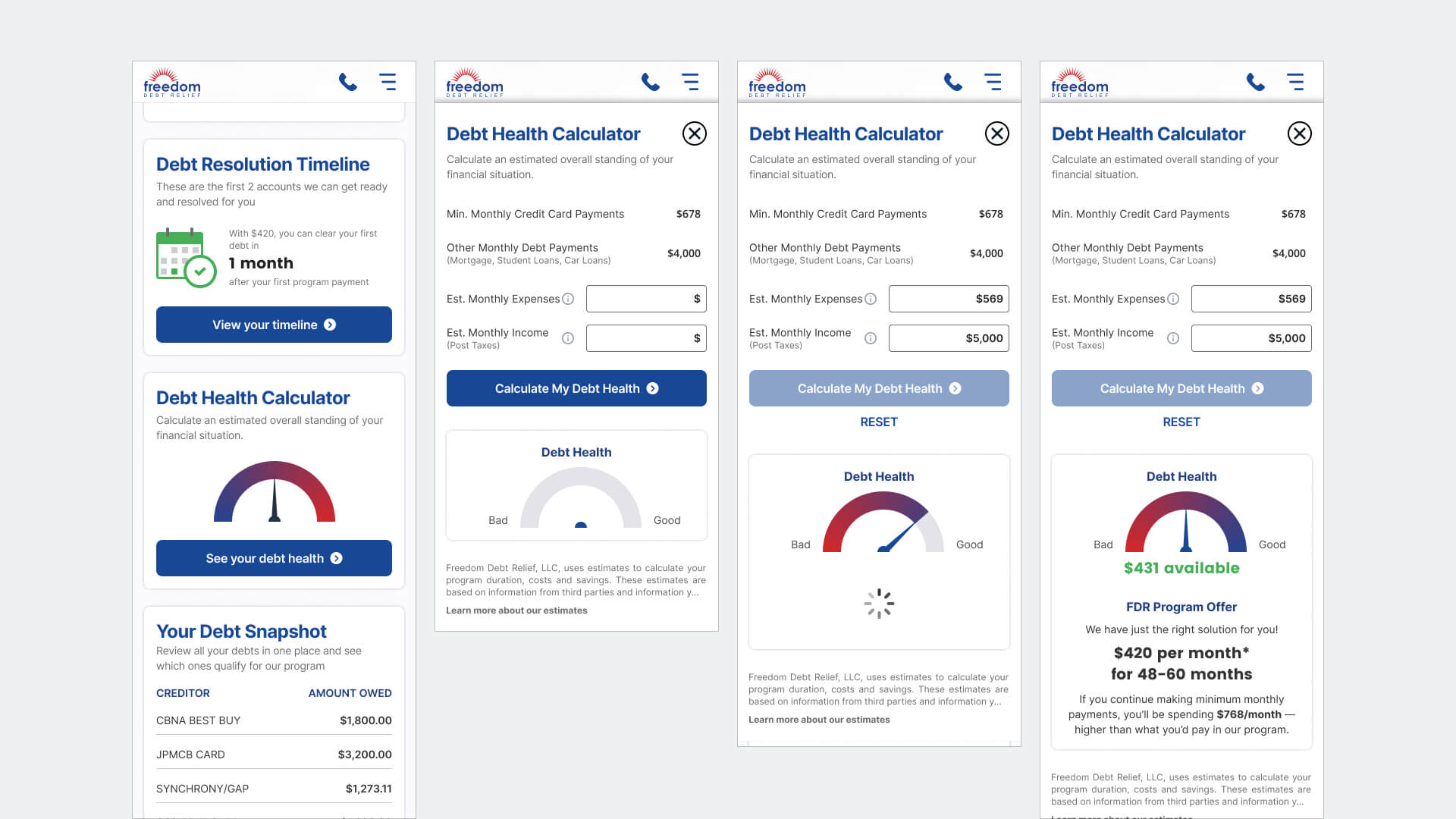
The redesigned program estimate experience consolidated key decision-making elements into a cohesive, user-centered flow:
Defined Paths Forward
Explicit options that guide users toward the next step, reducing ambiguity in decision-making.
Value Proposition Framing
Concise, relevant messaging that highlights the benefits of the program in the context of the user's needs.
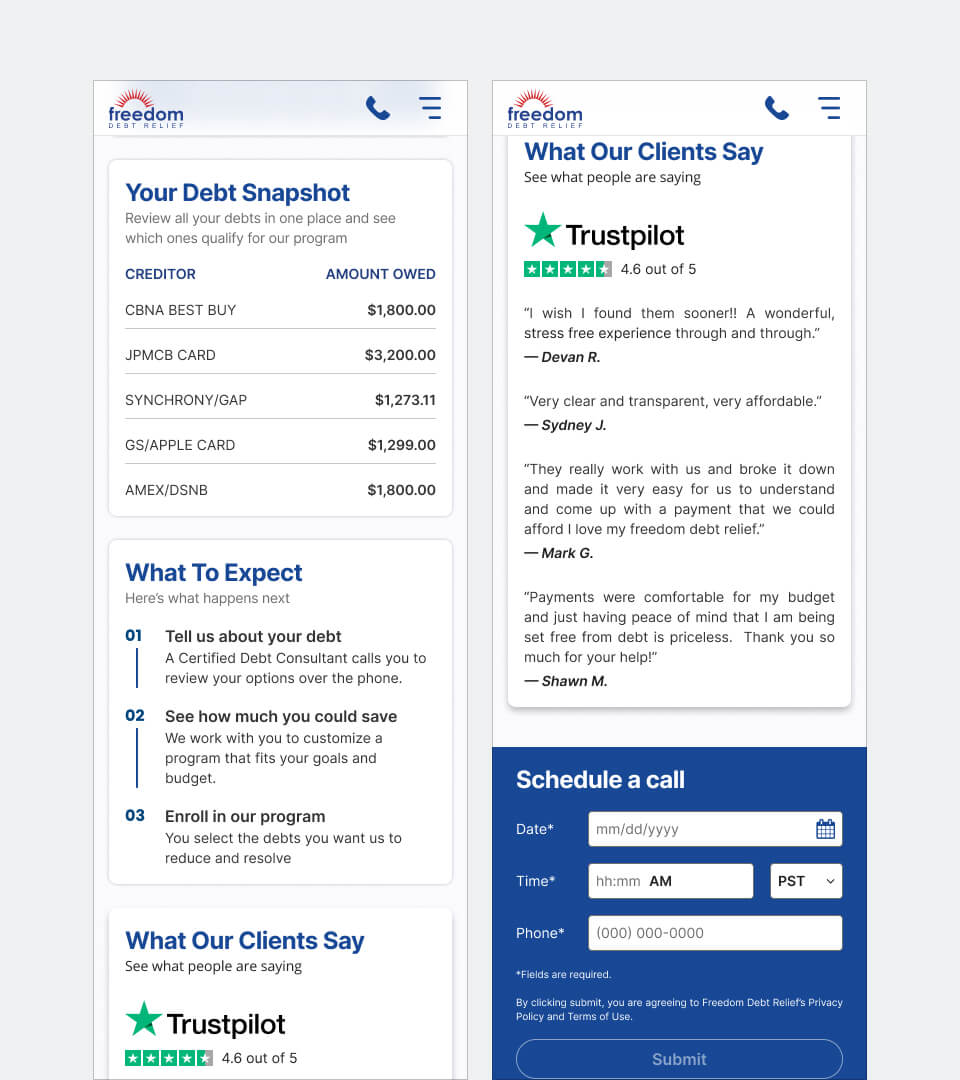
Social Proof
Testimonials and trust signals to validate the program's credibility and effectiveness.
Decision Support Tools
Interactive elements to help users better understand outcomes and prepare for the next step.
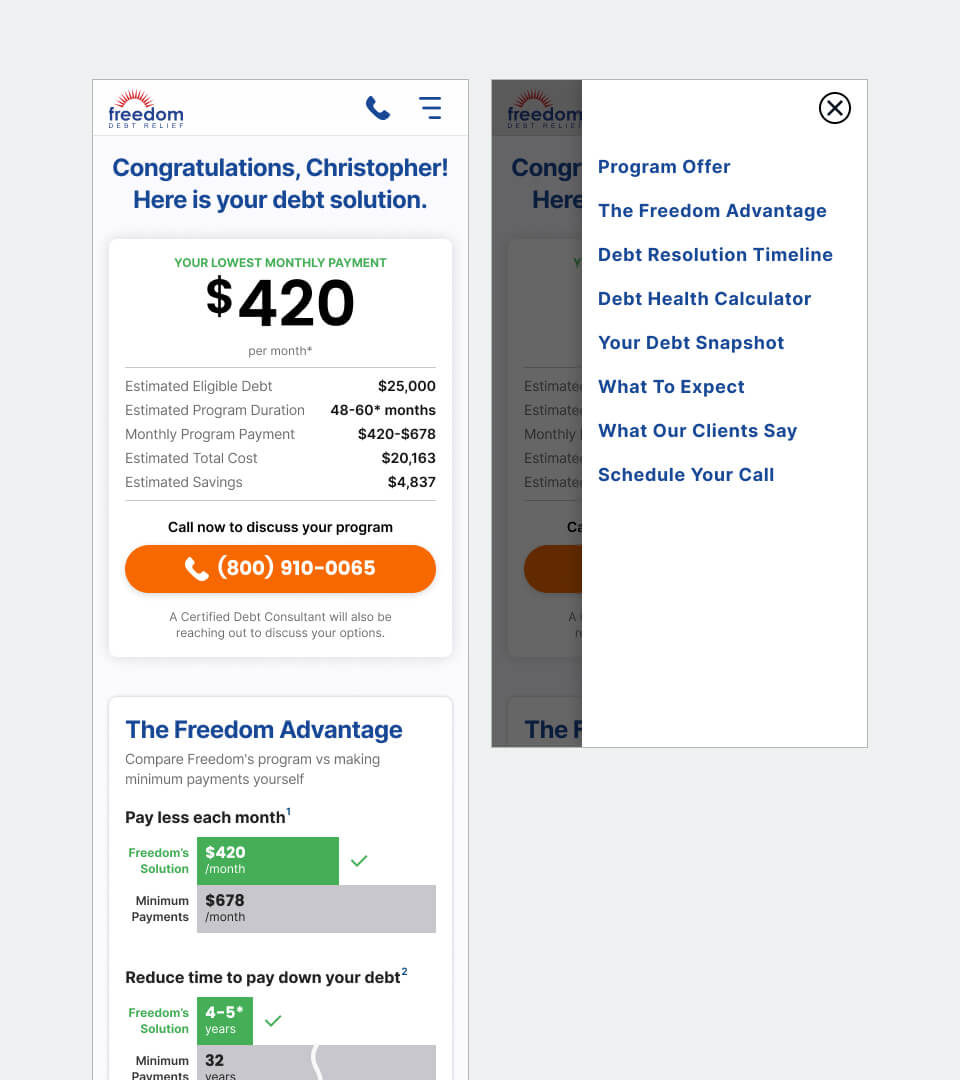
Other sections include:
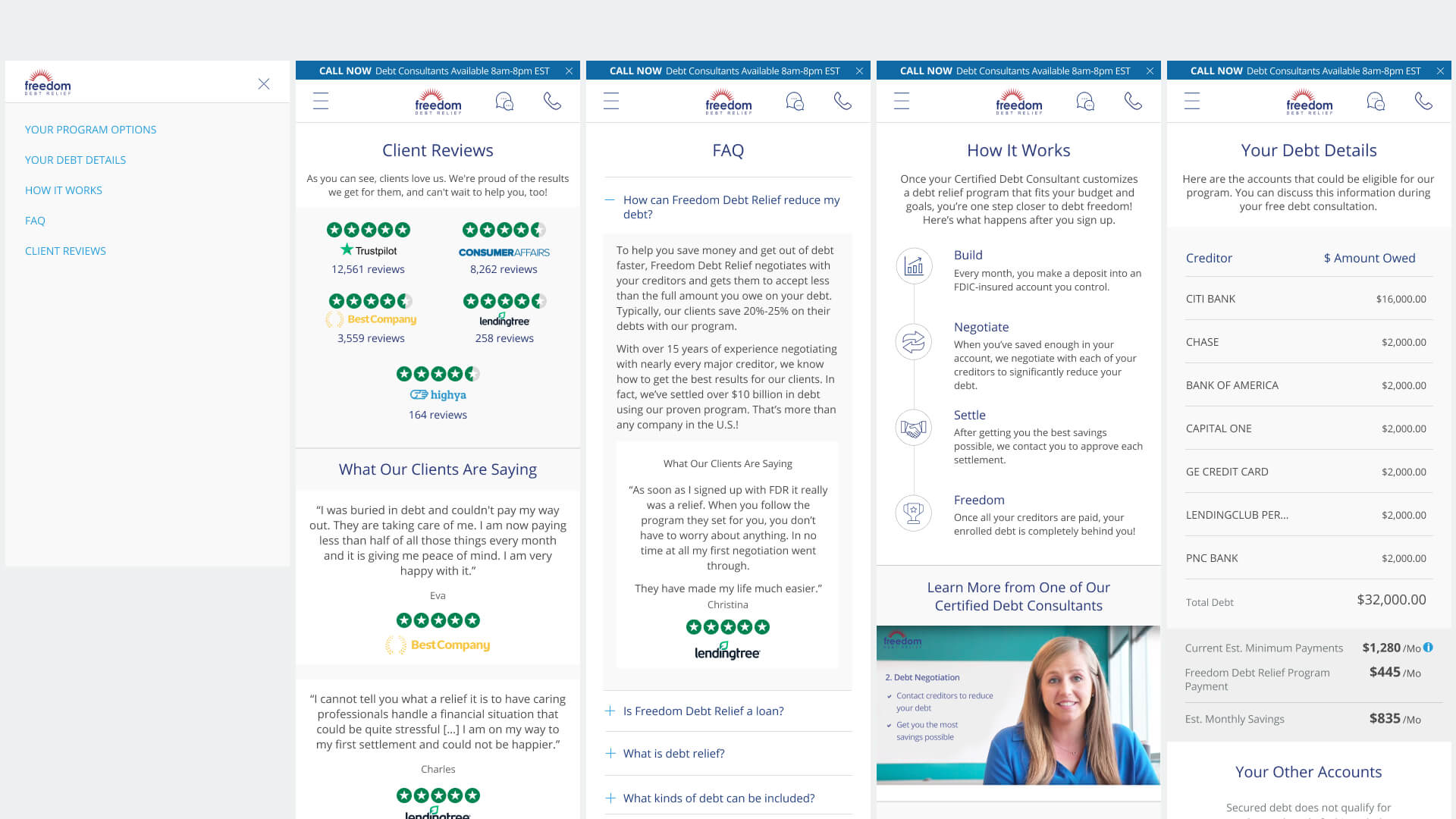
Your Debt Snapshot — legally required display of the credit card debt pulled from the user's credit report in the lead flow.
What to Expect — a quick overview of how simply the program works.
What Our Clients Say — continued from prior iterations due to strong engagement.
Schedule a Call — one of the most requested features based on user interviews.
Execution
To bring this to life, the work focused on:
- Increasing conversion at a critical funnel stage
- Reducing user drop-off during program evaluation
- Improving user comprehension and confidence
- Stronger alignment between digital experience and consultant conversations
Additionally, the patterns established in this work became a foundation for scalable design across other product experiences.
Key Learnings
Built over a 1.5-year, experiment-driven cycle, this experience focused on the highest-stakes moment in the funnel — the user's decision to commit.
By rigorously testing and sequencing content for maximum clarity and trust, we turned a high-friction step into a high-performing conversion surface.
Takeaways
- Conversion in high-stakes flows is driven by trust and clarity — not volume of information
- The decision moment must be intentionally orchestrated, not just designed
- Sustained, research-driven iteration yields compounding business impact
Shipped through V2.5 — this work became a foundation for continued optimization across the acquisition funnel.